

Reverence of a Dream
Gabriel Collins
February 2026 – April 2026
Daydream
Portland, Oregon
There's a kind of attention that belongs to childhood. Color before category, shape before name, a willingness to look at a chair and a vase and a flower as equal citizens of a room. The work Laudrige Studio presents at Daydream takes that attention seriously, then puts it in conversation with the other thing, the grids and structures and analytical frame we build over a life, and lets the two argue across oil, oil pastel, paper, and concrete.
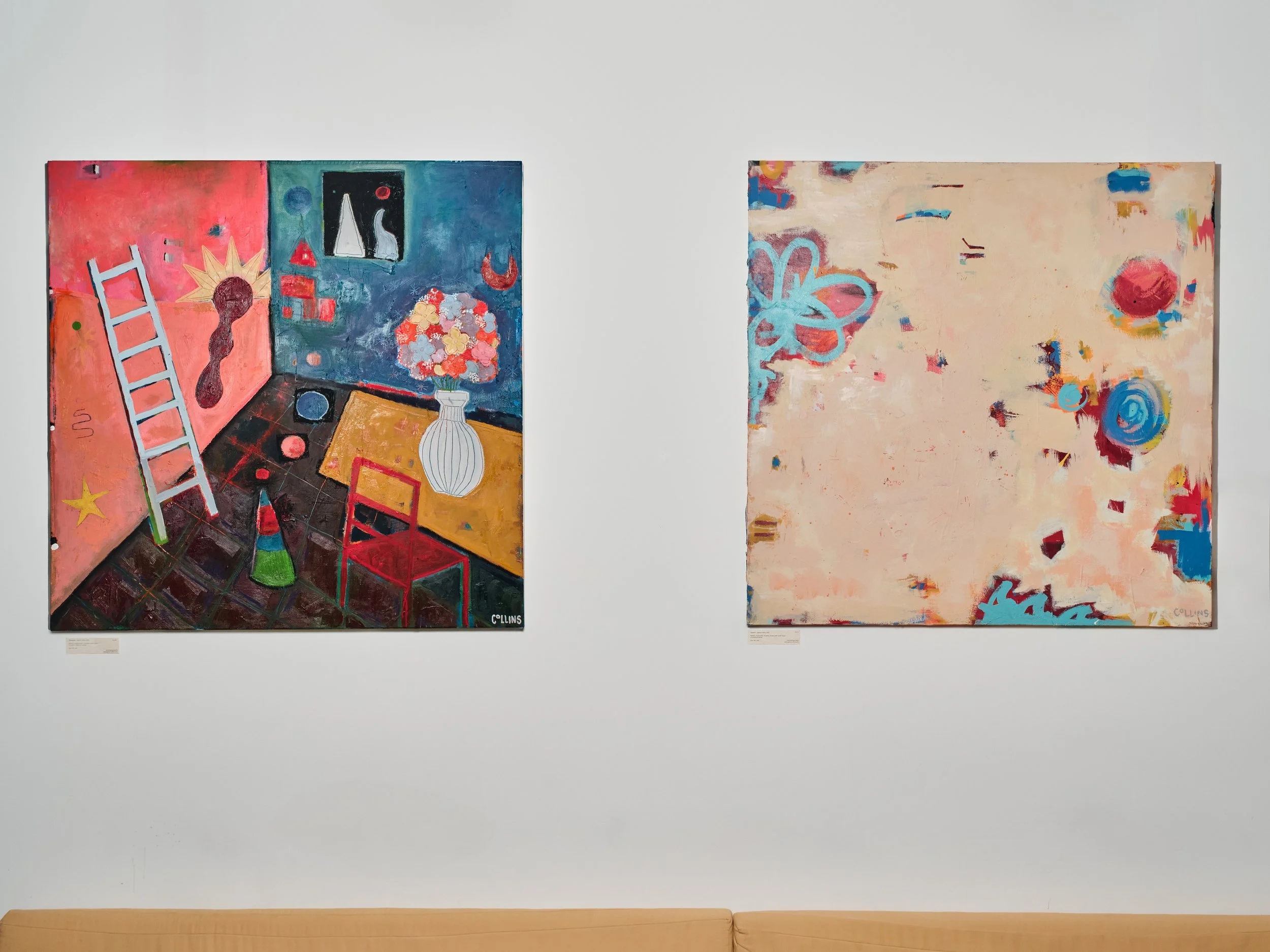
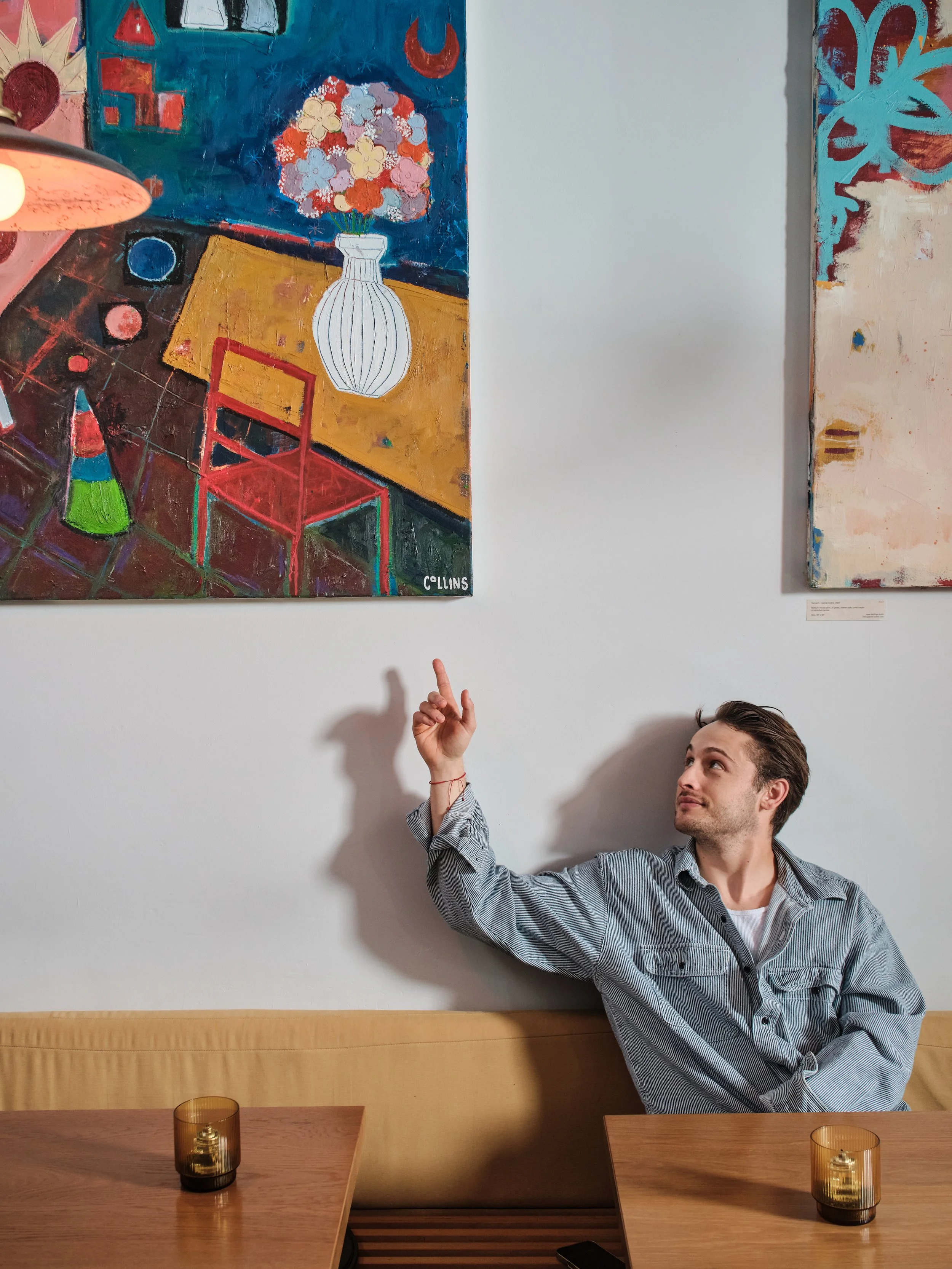
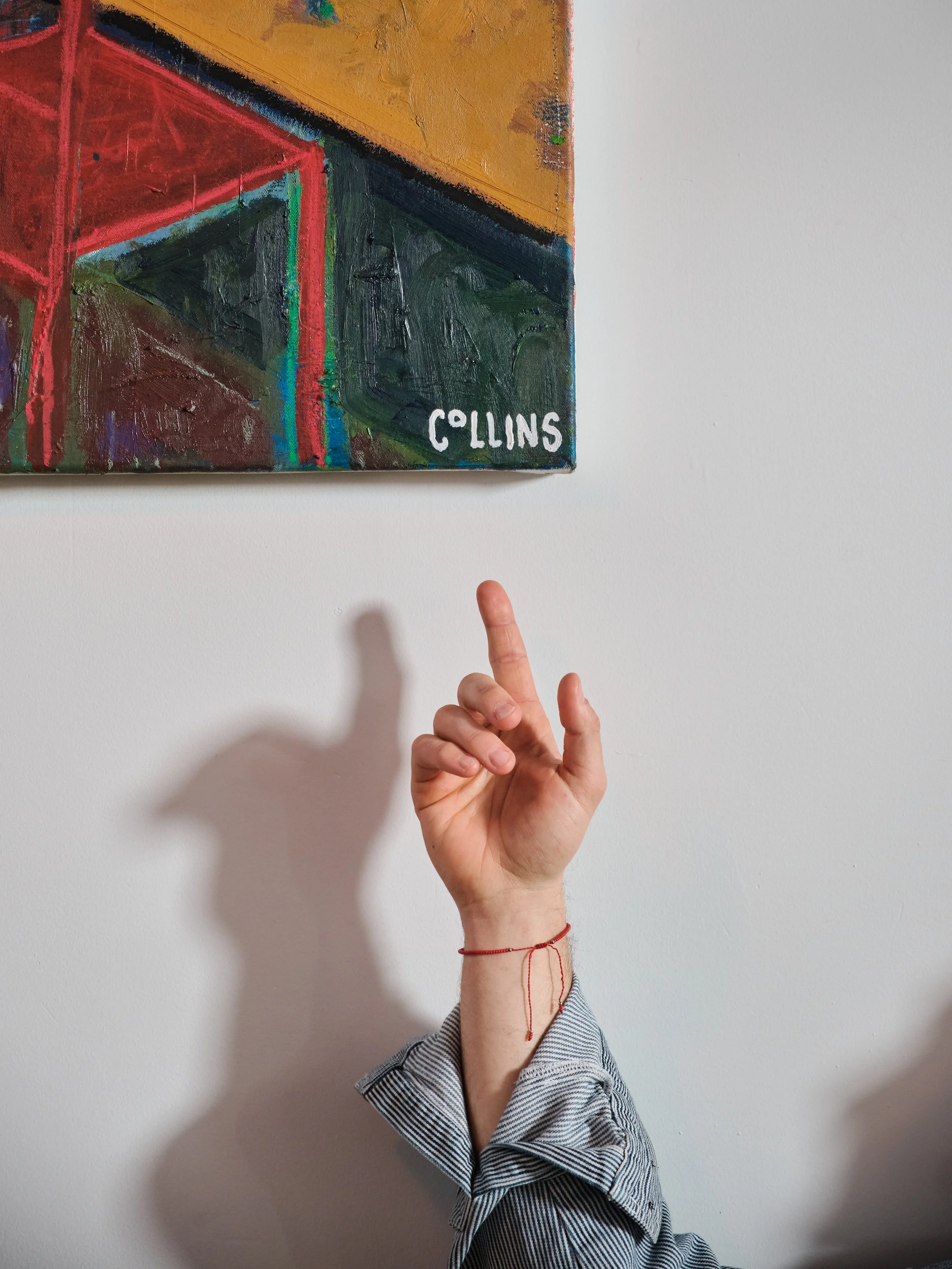
The title piece states the thesis most directly. Reverence of a Dream is a large oil painting of an interior, an interior the way a child remembers their own birthday. A pink wall on one side, a deep blue wall on the other, a ladder going nowhere, a yellow sun-shape, a star on the floor, a vase of flowers blooming larger than the table that holds it, a party hat tipped on its side. Nothing is to scale and everything is in its right place. The oil is laid down thick and saturated, the kind of color that doesn't apologize. The room sits somewhere between stage set and memory, holding both at once. It reads as a dream of the room more than a record of it, which is the only honest way to render the dream of being small.
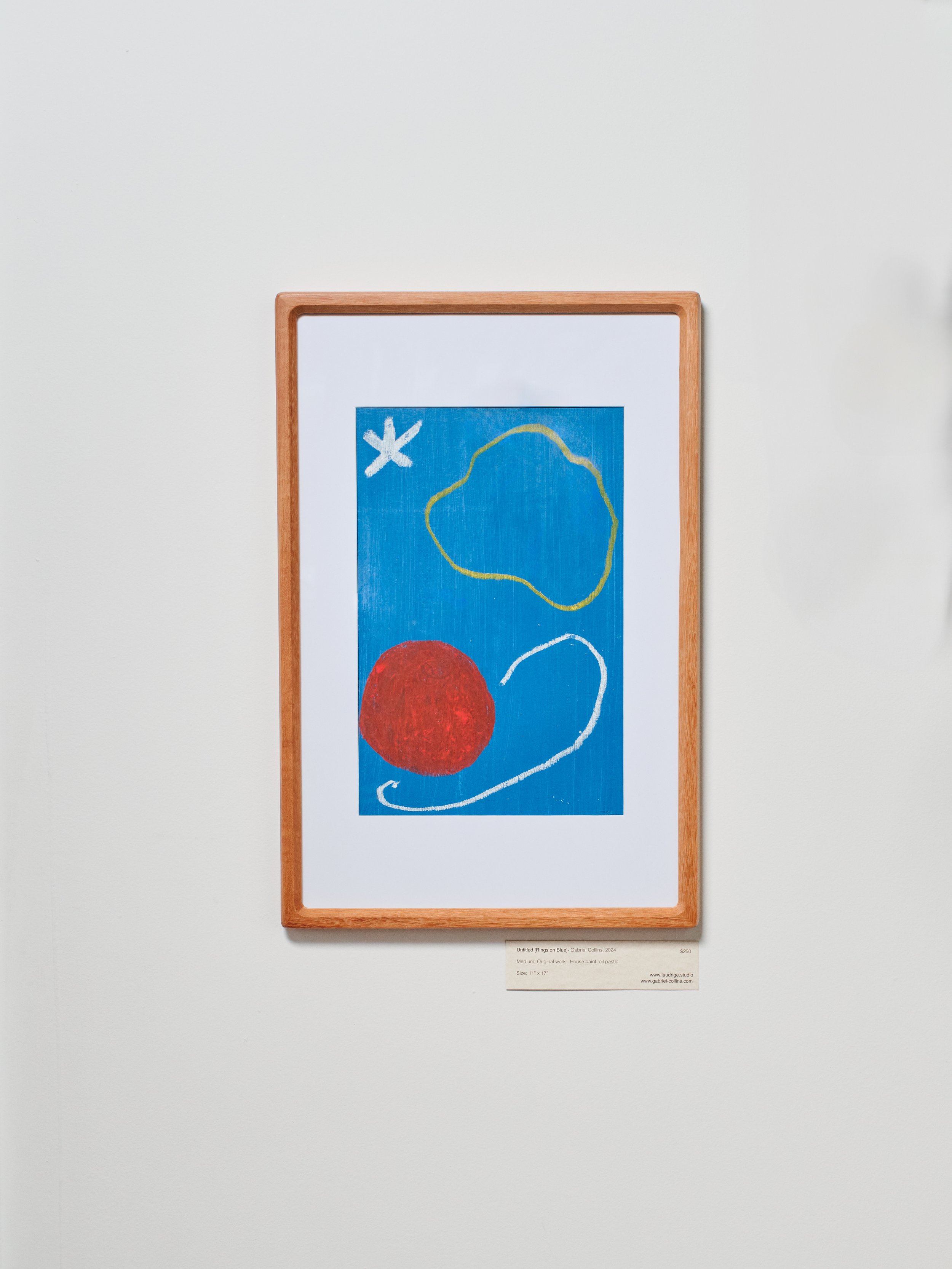
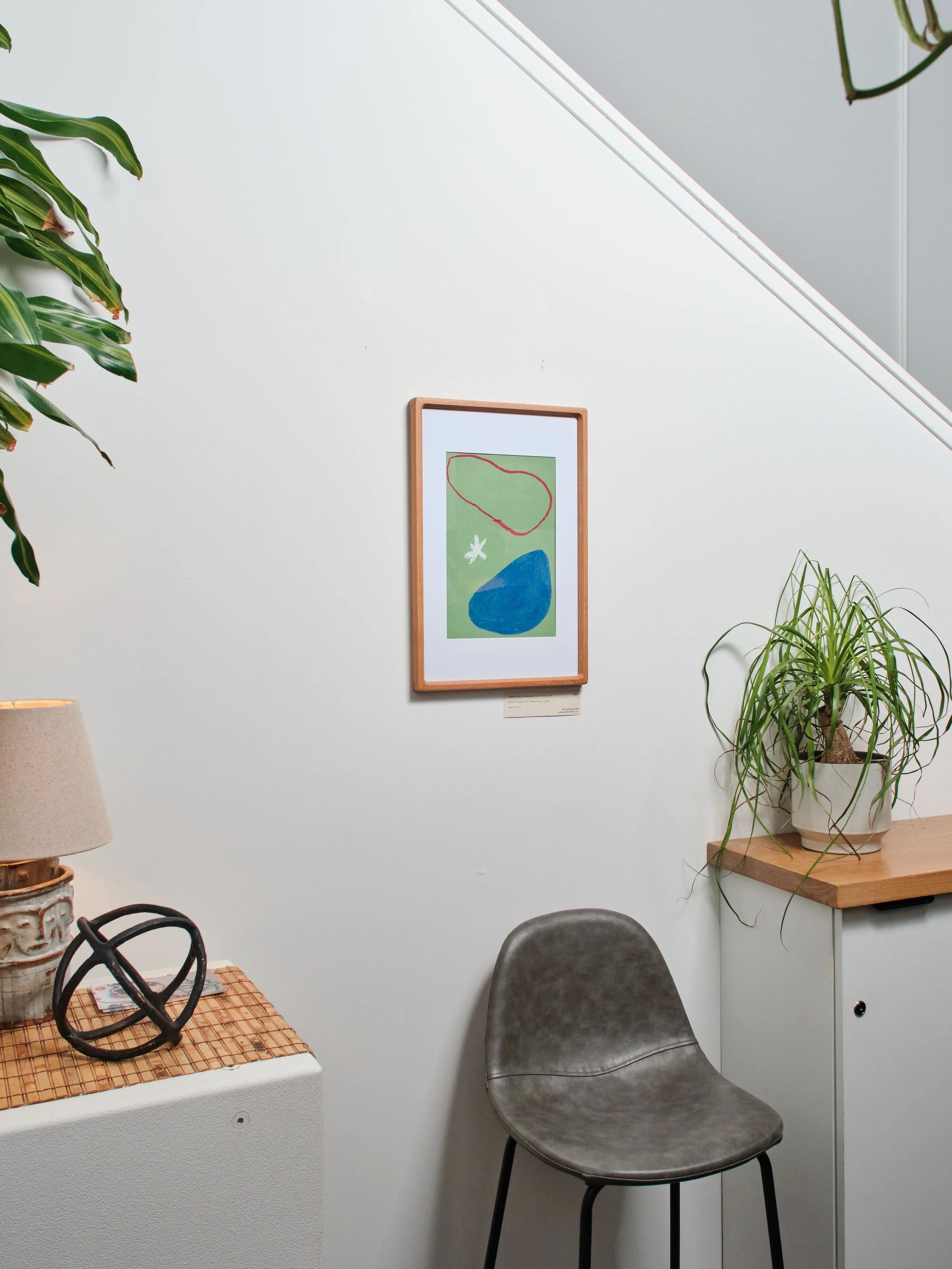
From there the show opens out into the shapes themselves, and the room gives way to its contents. The works on paper, house paint and oil pastel on small panels, pull single elements from the central piece and hold them up to the light. A red disc, a yellow ring, a white star scratched into a blue field. A green ground with a coral oval and a blue stone. They read as primary forms, the alphabet a child uses before they have the words. The paint handling is loose and physical, owing something to Matisse's late cutouts and to the way a kid colors when no one is watching, fully committed to the gesture, easy with the line.
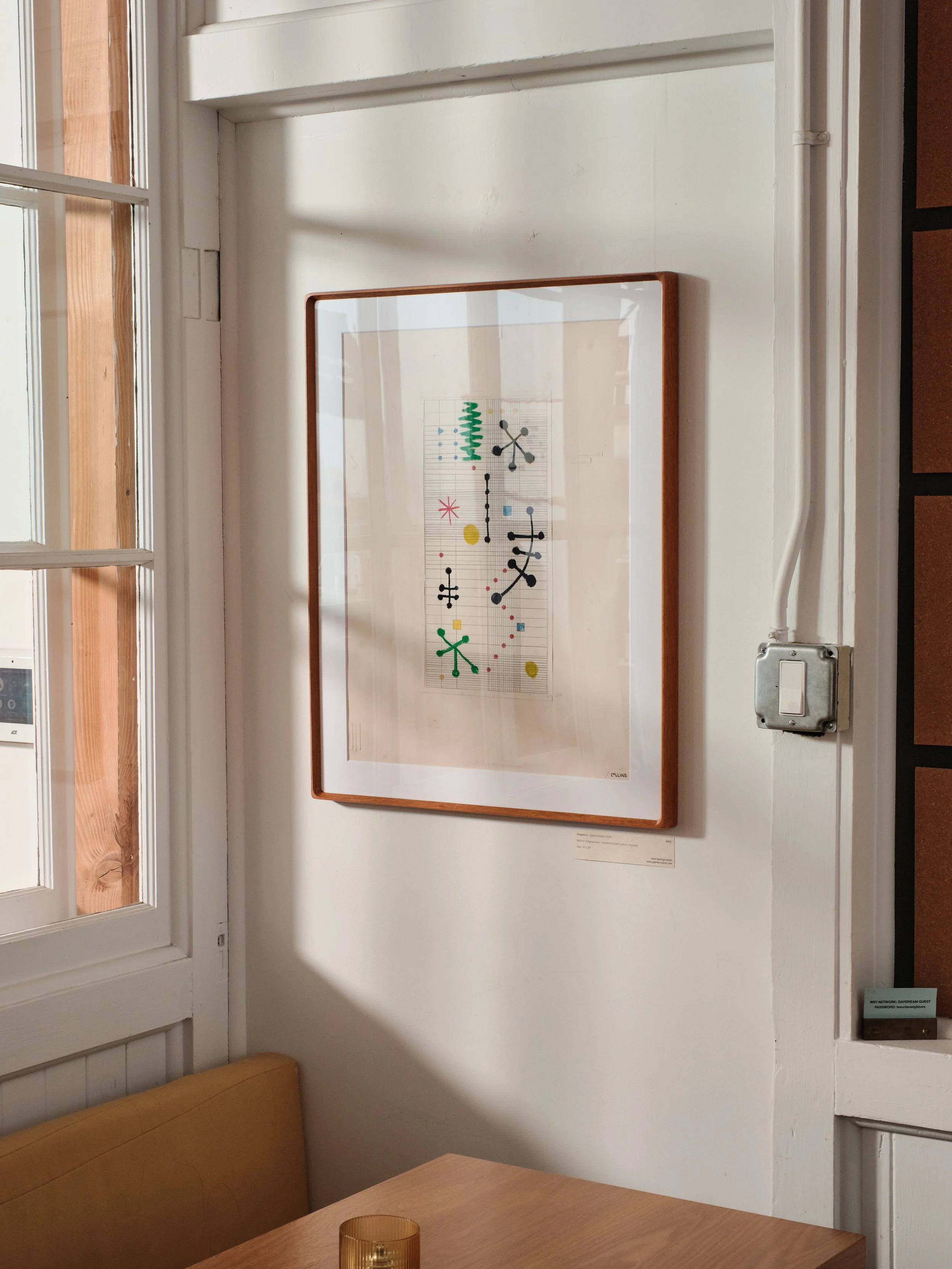
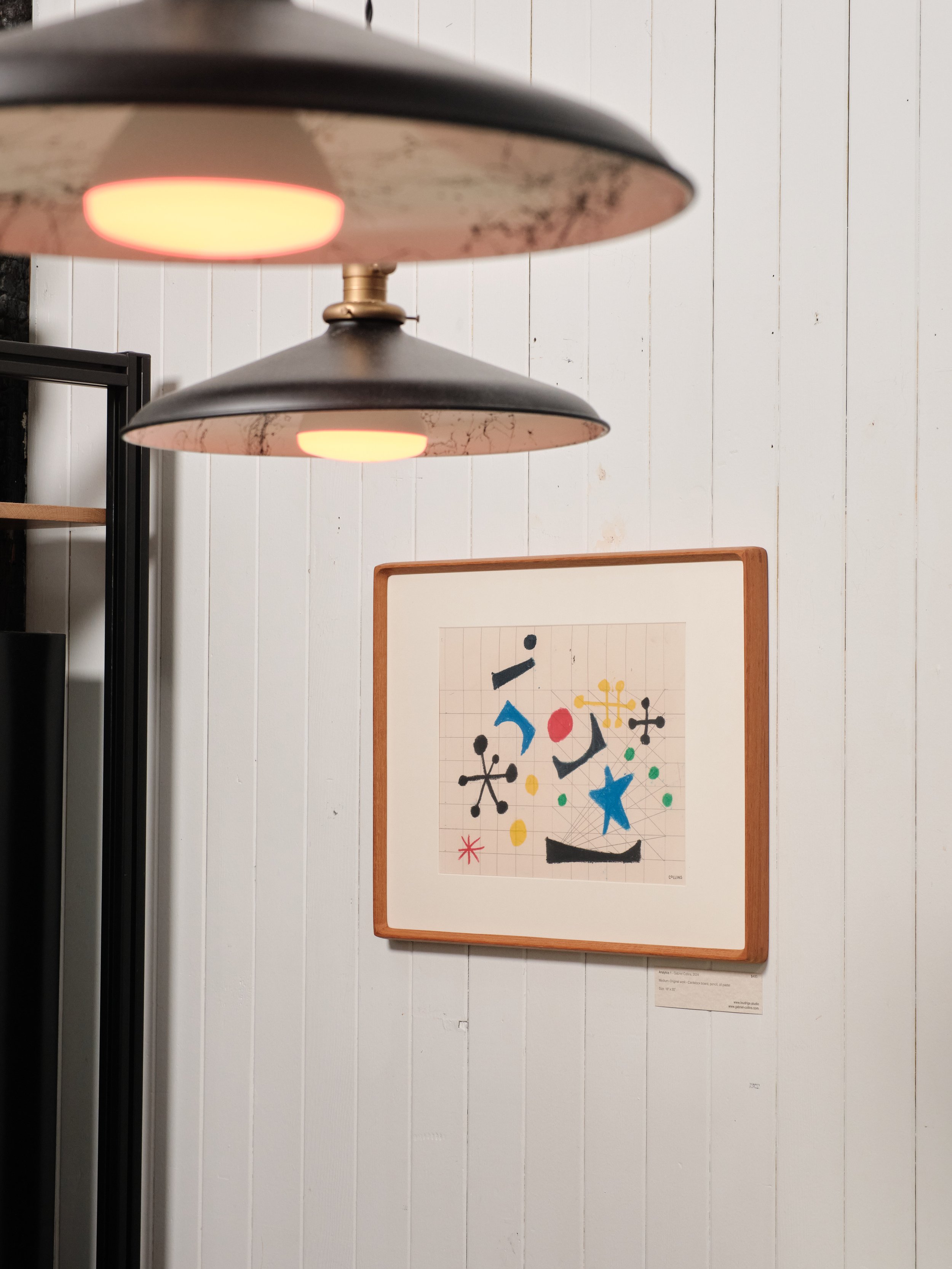
The Analytics works are where the argument turns. On gridded cardstock, in pencil and oil pastel, the same vocabulary returns. Stars, dots, asterisks, blue and red and yellow. Now they're ruled and indexed. Diagonals cut across the grid. Marks fall on coordinates. The pieces sit somewhere between Agnes Martin and a child's worksheet, and the resemblance is the whole point. This is what happens when the dream-shapes are asked to account for themselves. They keep their color. They lose their float. The grid arrives and the room organizes around it, the way structure arrives and a life organizes around it, and the question the work keeps asking is whether the shapes survive the translation.
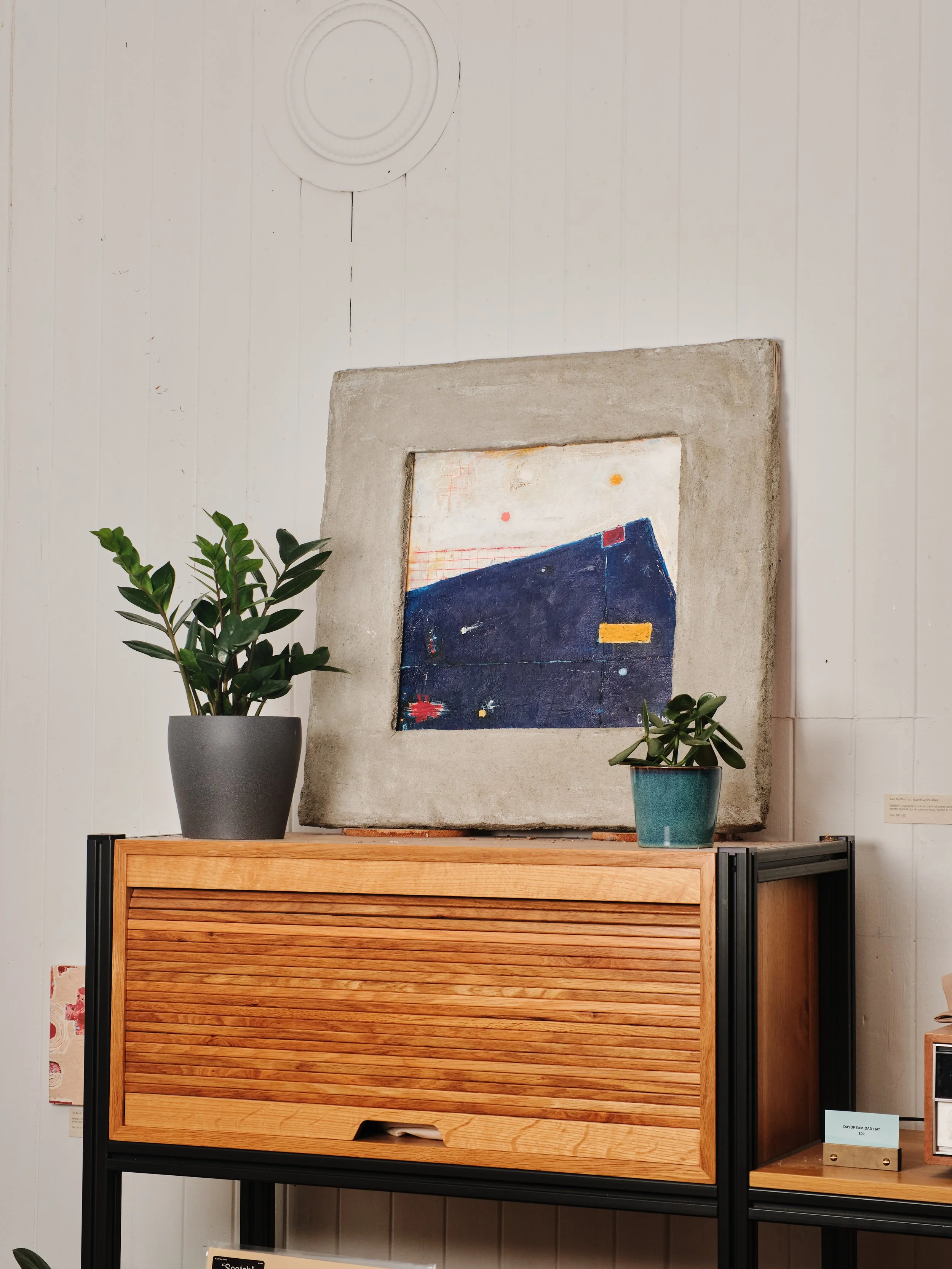
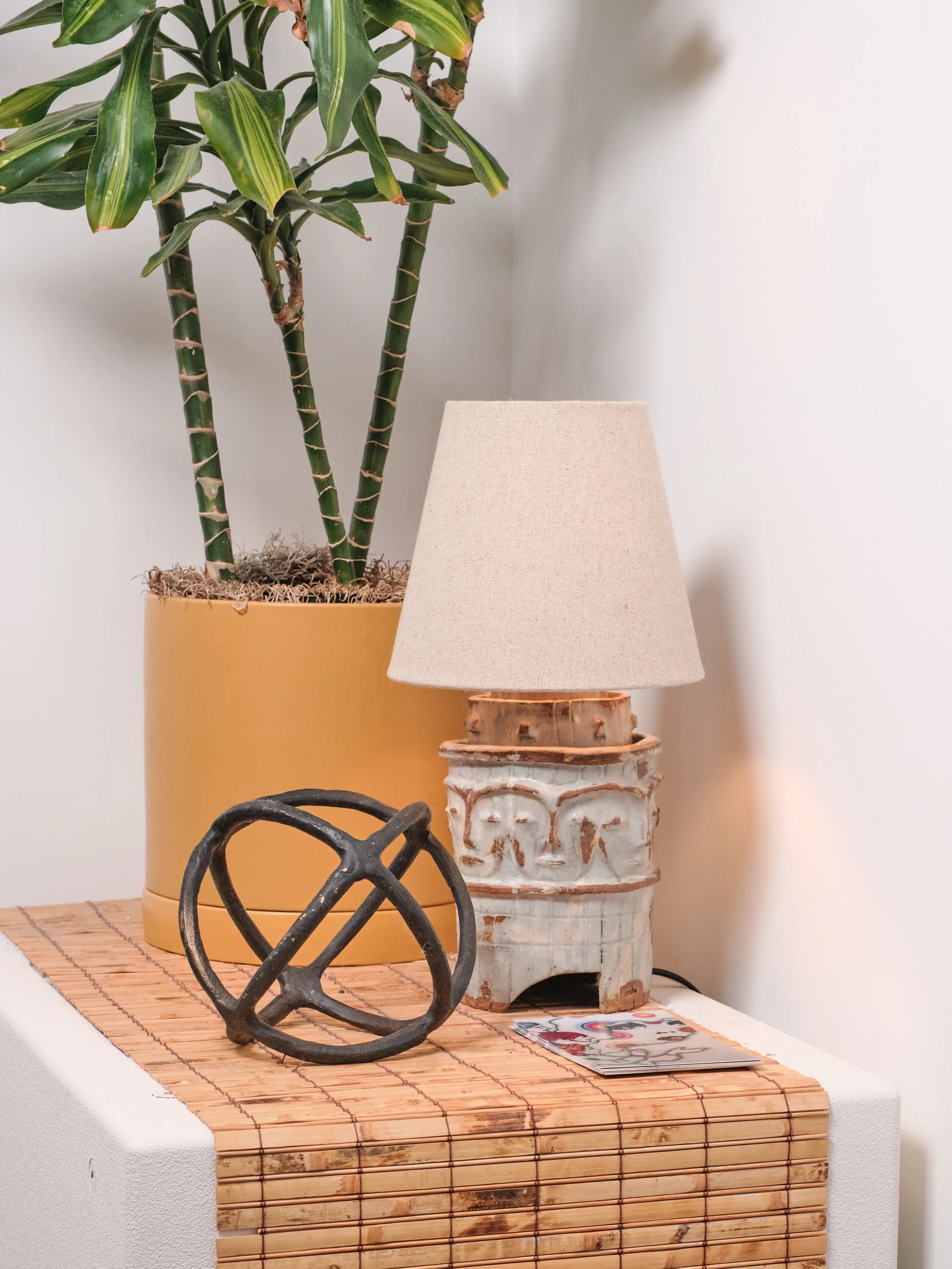
The assemblage and three-dimensional pieces push that question into material. Take Me With You is a small painted panel of deep navy with a yellow bar and a red flare, set inside a thick raw concrete frame, the concrete cured rough and uneven so the painting reads like a remembered window in a brutalist wall. Toy Box 1 takes the opposite approach. House paint, coffee grounds, and acrylic built up into a textured plaster surface where a red cross, concentric rings, and small marks emerge like artifacts pressed into a wall. Both pieces hold the childlike imagery inside something heavy and material, the way an adult holds a memory. Protected, framed, slightly buried. The lamps and ceramics installed throughout the space extend the gesture into the everyday. A bamboo lamp base. A face-jug planter. The dream furnished out into the room you actually live in.
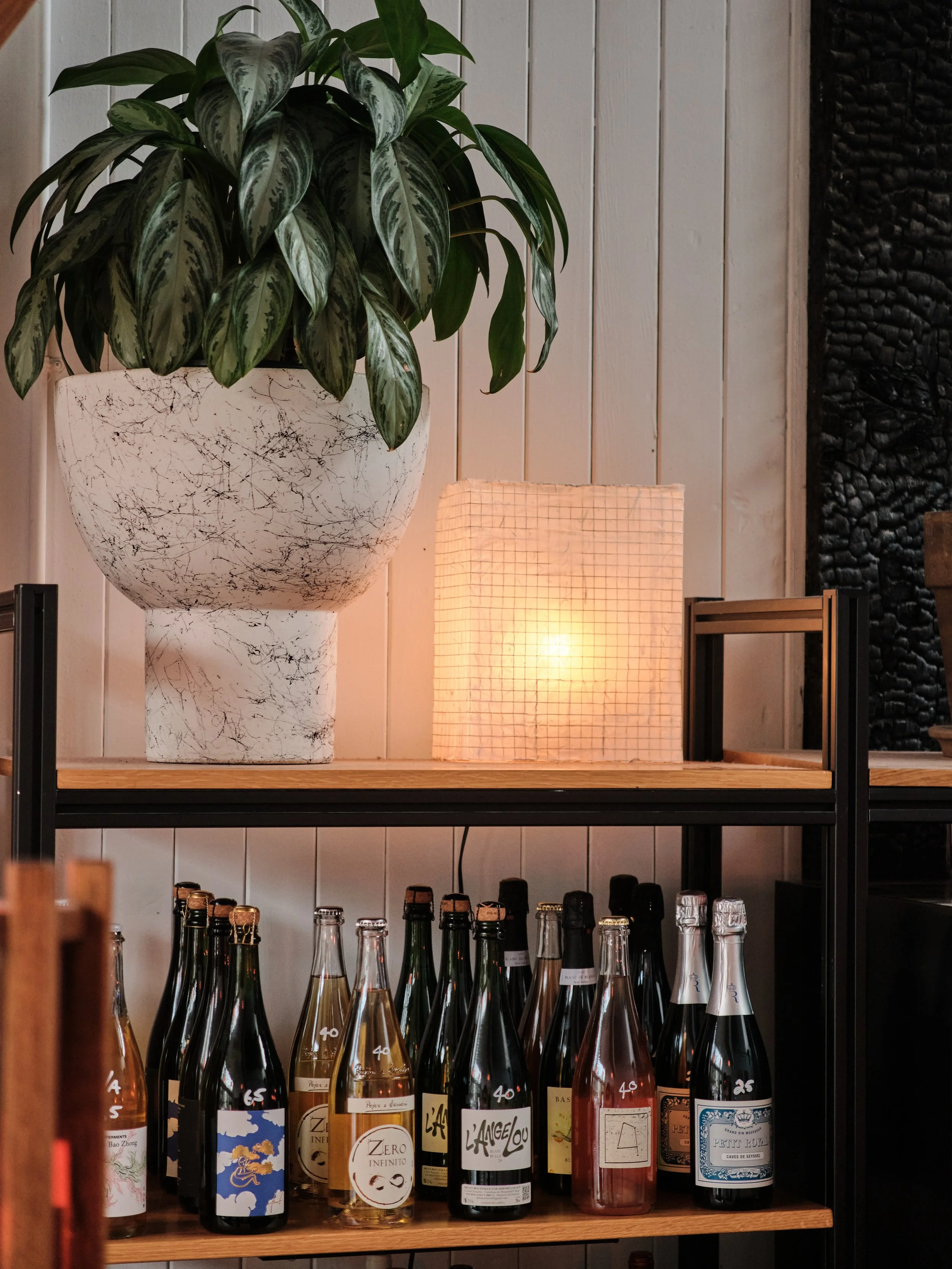
Installed across Daydream's coffee bar, retail shelves, and seating areas, the work lives inside the rhythm of a working café. Espresso machines, conversation, sun moving across the wood floors. It's a fitting context for a show about how a dream survives the day. The pieces hold both the child and the adult in the same room, the form and the grid, the color and the structure, and ask whether reverence is what lets both stay.