

From Me to You
Gabriel Collins
November 2025 – April 2026
Case Study
Portland, Oregon
There's a long tradition of the cowboy as emotional shorthand. Solitude, freedom, the ache of open distance. The work Laudrige Studio presents at Case Study Coffee takes that shorthand seriously, then pulls it apart across raw canvas, painted canvas, found-object assemblage, and twine-laced frames.
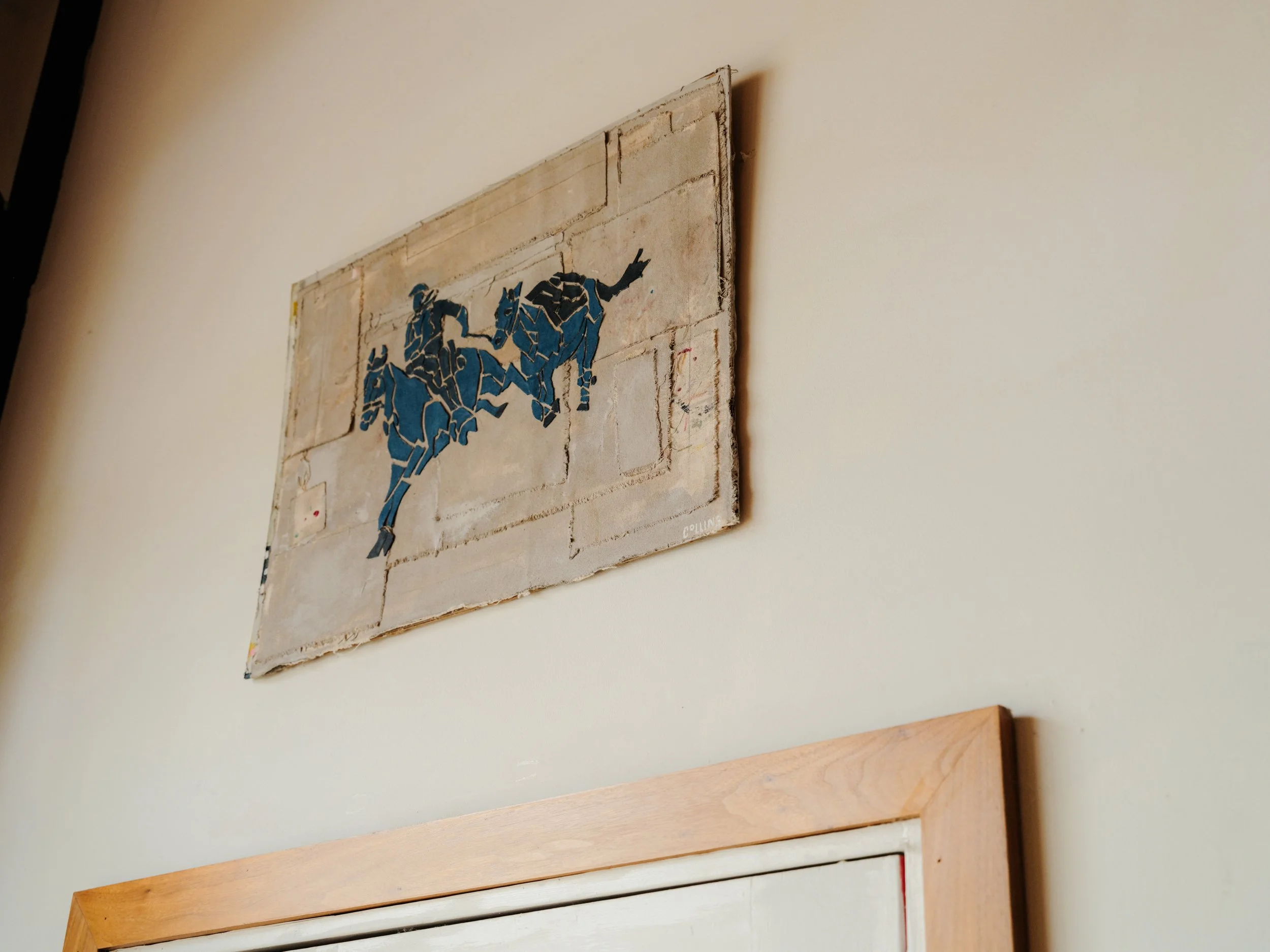
The unprimed canvas pieces state the thesis most directly. Teal silhouettes of bucking broncos and riders are painted onto natural canvas that hangs unstretched, its edges rough and unfinished. The surface still carries the residue of its former life as commodity infrastructure, the kind of material used for drop cloths, tarps, and shipping covers before anyone decided it was worth looking at. The western mythology arrives on a workhorse substrate. These aren't nostalgic images. They're images about nostalgia, rendered on a material that knows something about labor, utility, and the distance between function and meaning.
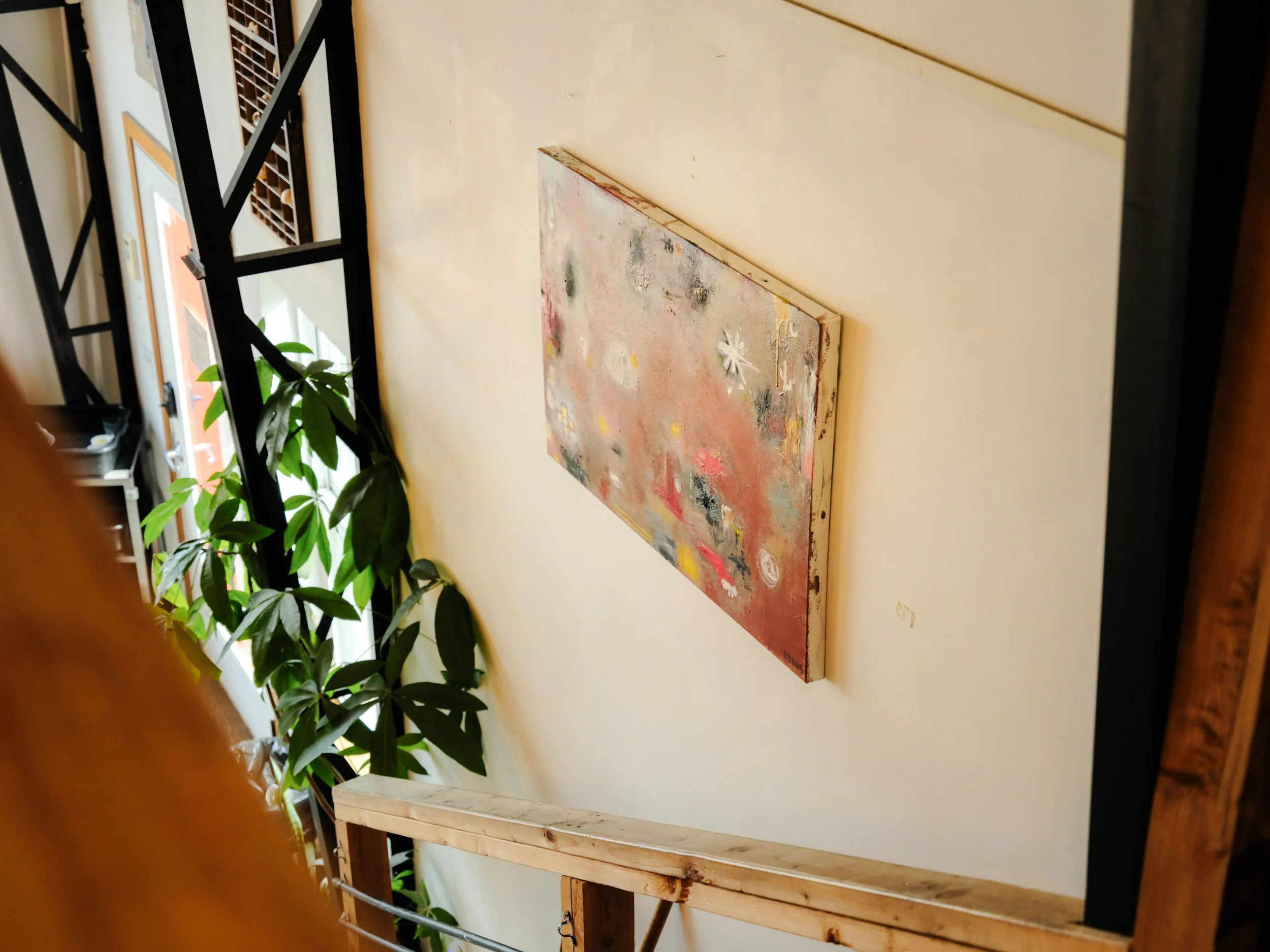
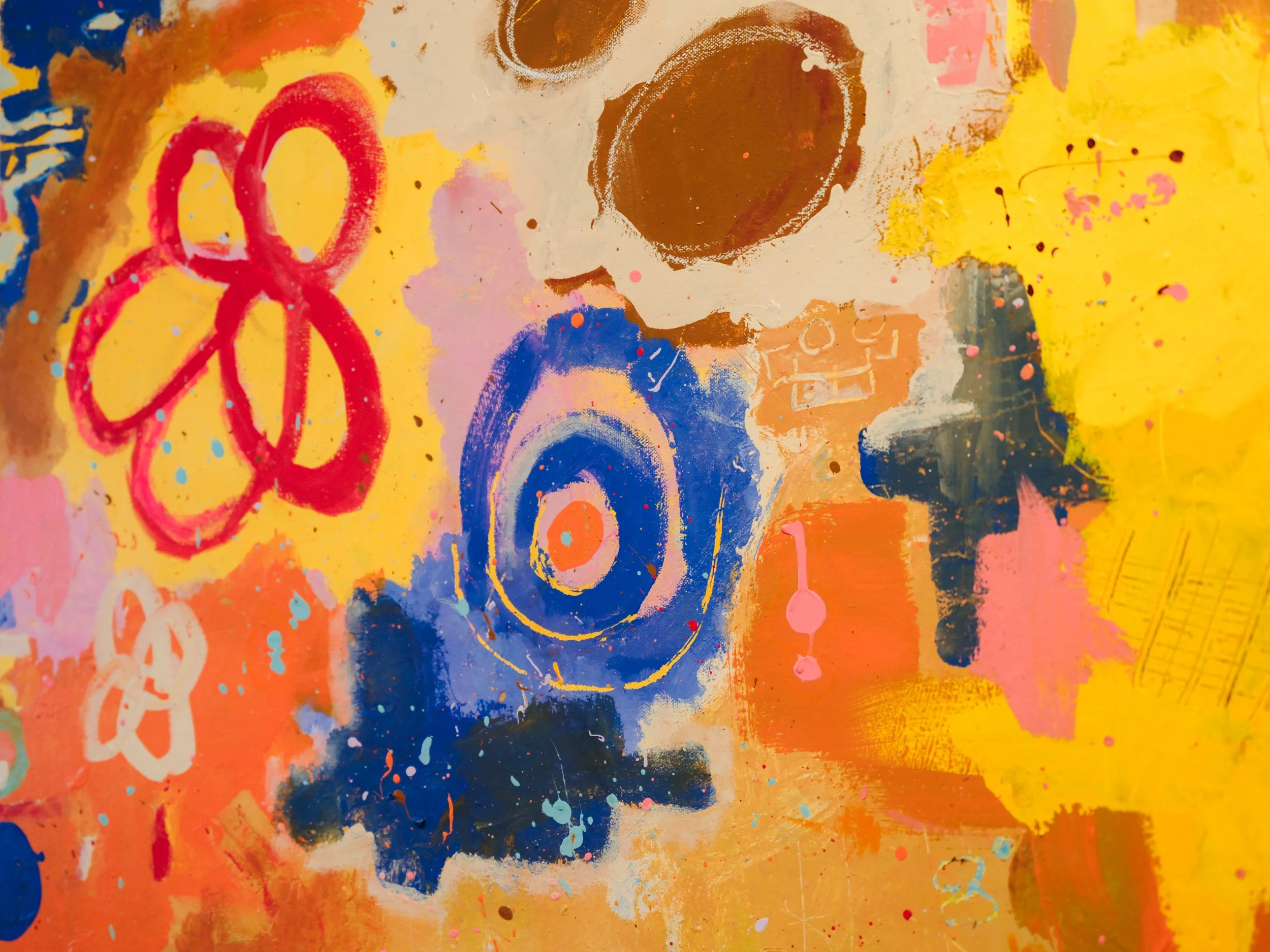
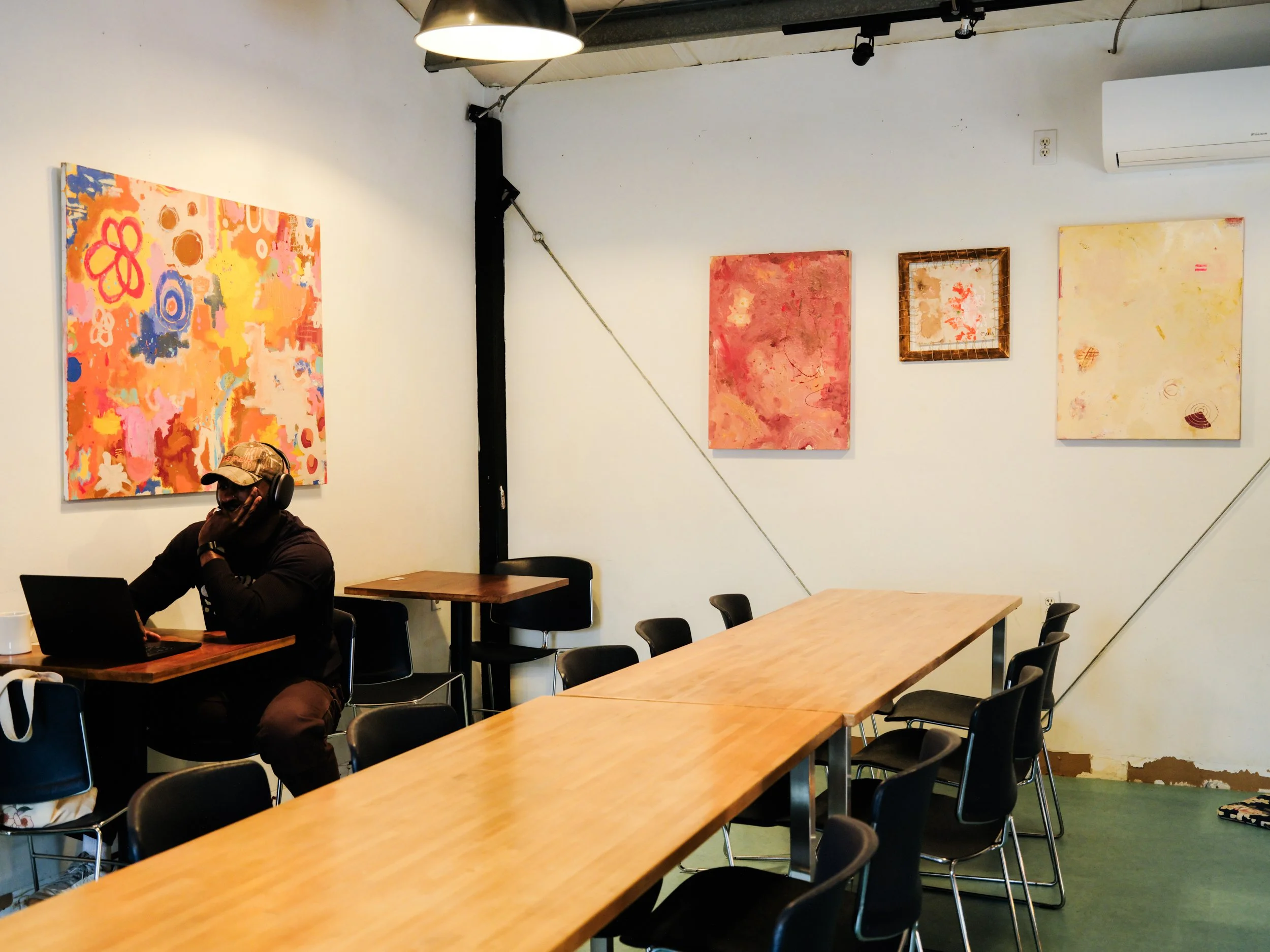
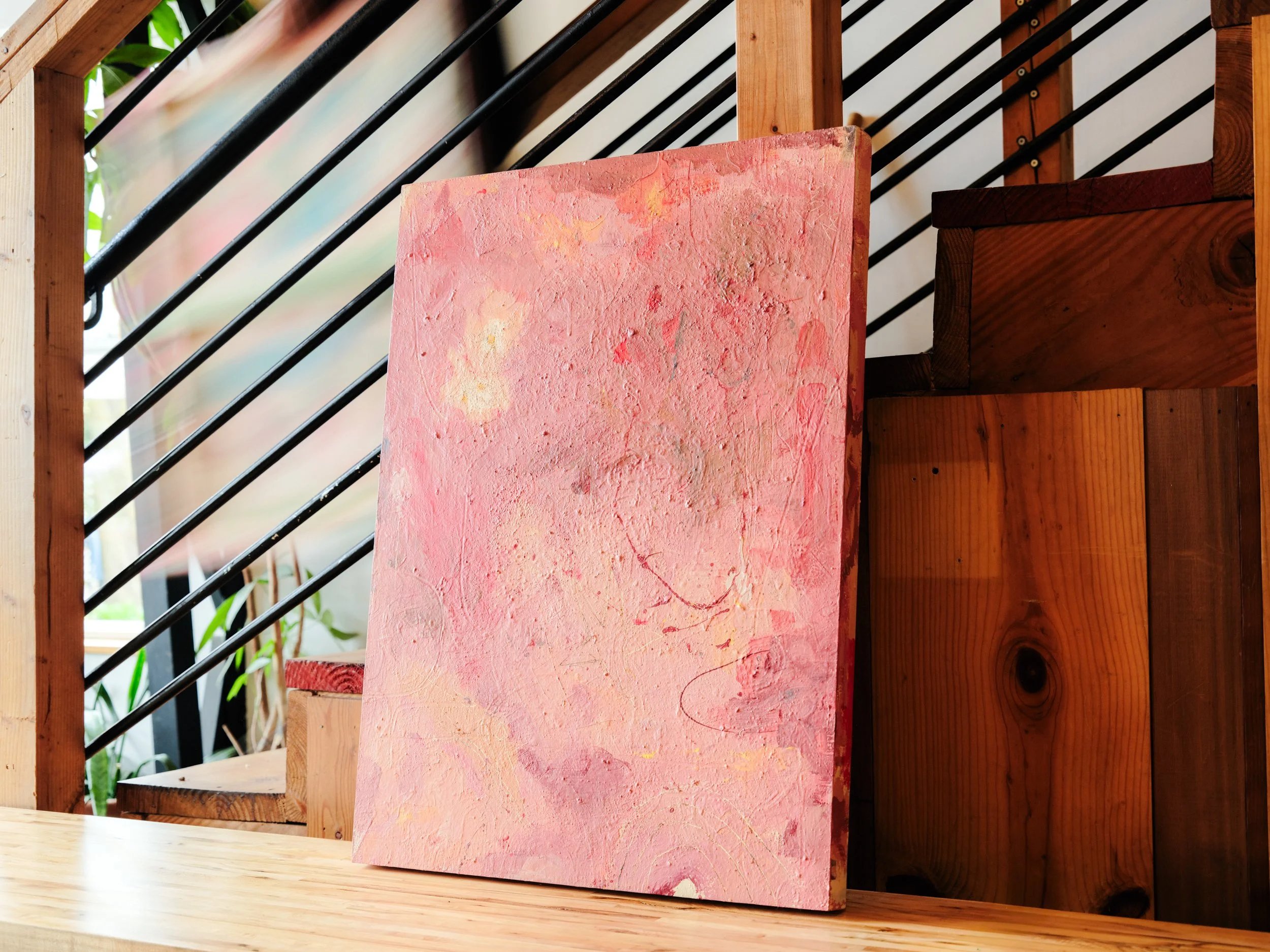
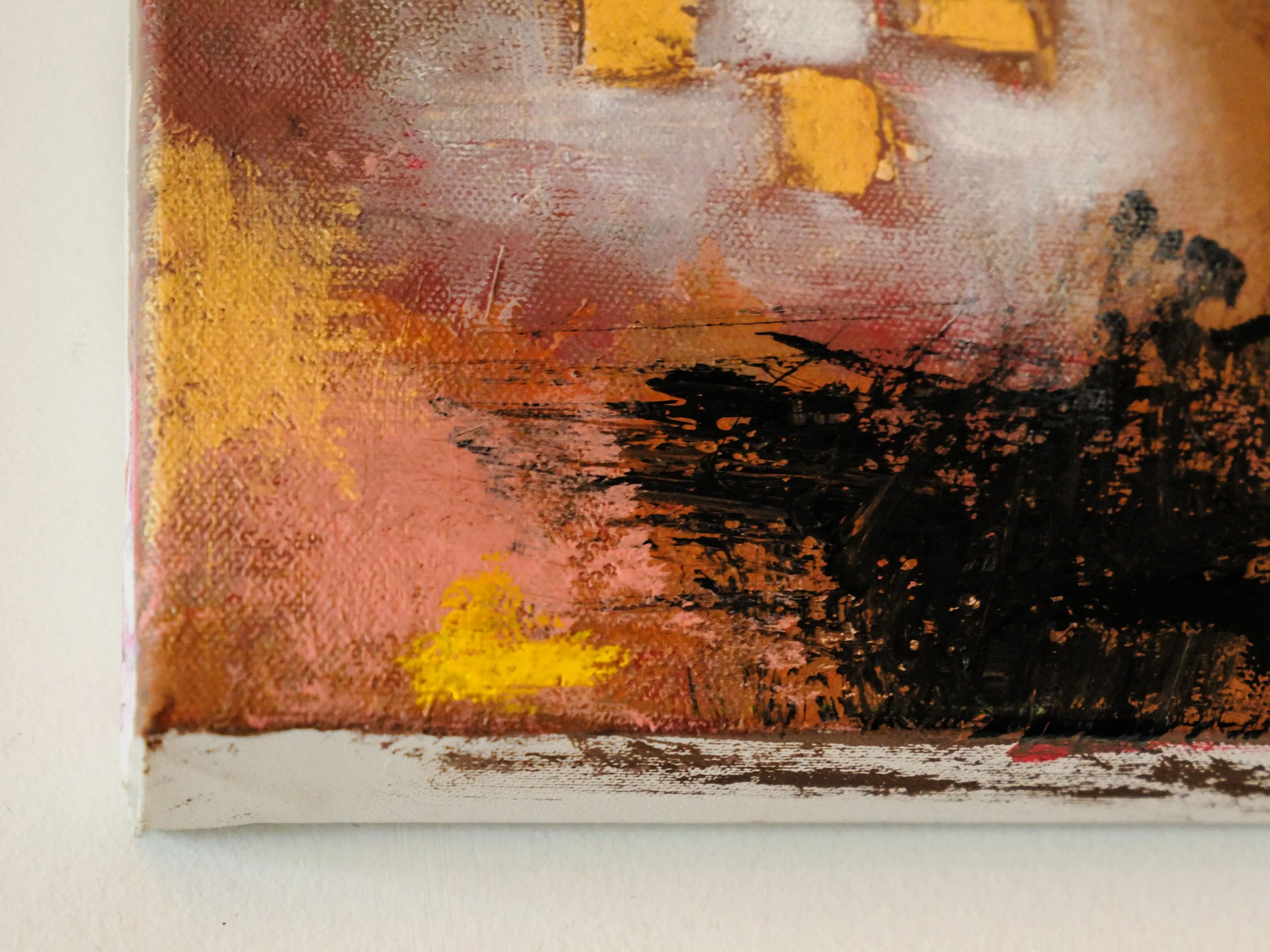
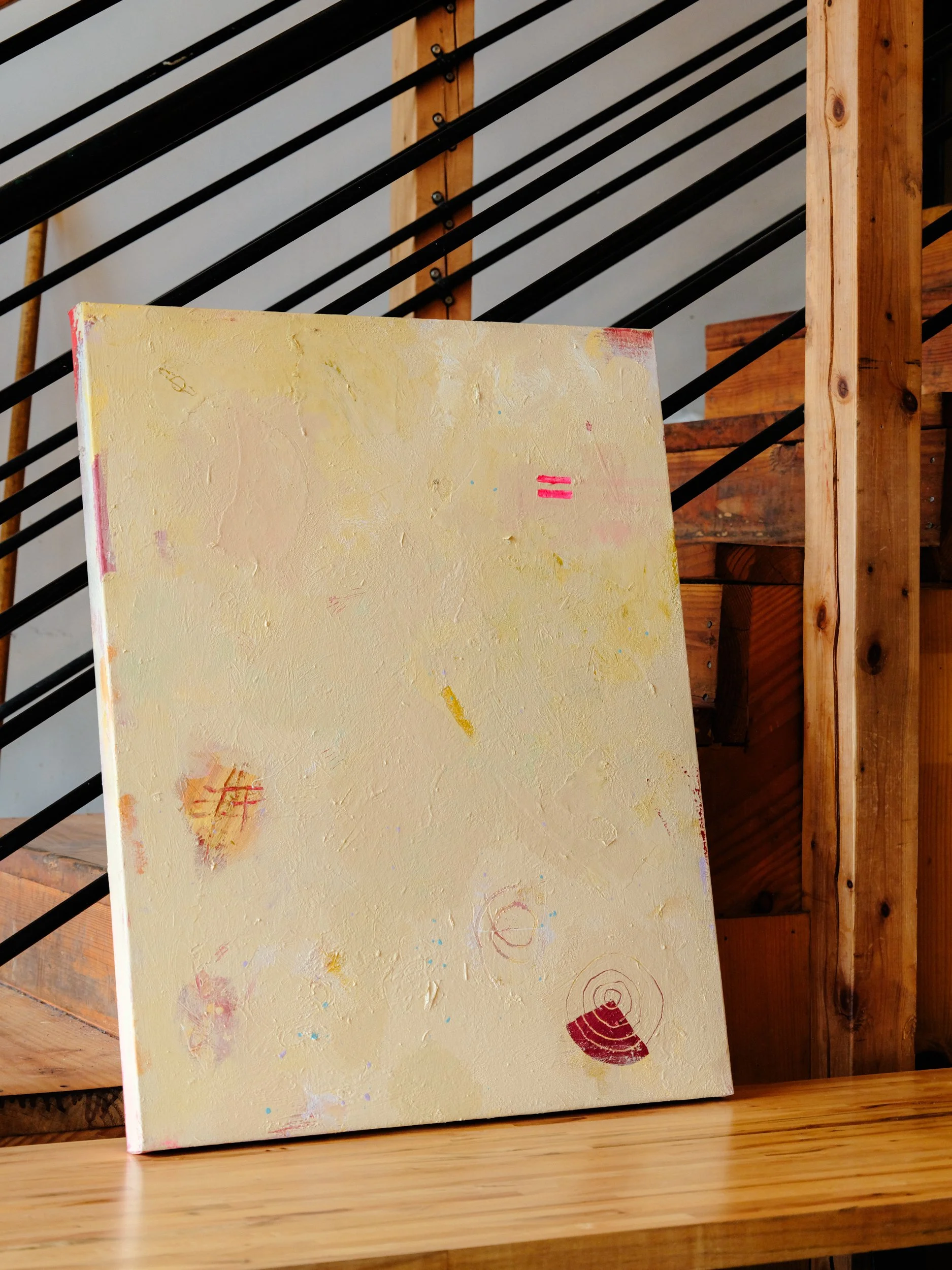
From there the work opens into abstraction, and the cowboys give way to feeling without figure. Large canvases move through desert-hour palettes. Sun-bleached pinks, burnt sienna, pale yellows that suggest late afternoon heat or the inside of a closed eyelid. The paint handling is physical and gestural, owing something to Abstract Expressionism's belief that the arm and the brush can carry emotional content without representation.
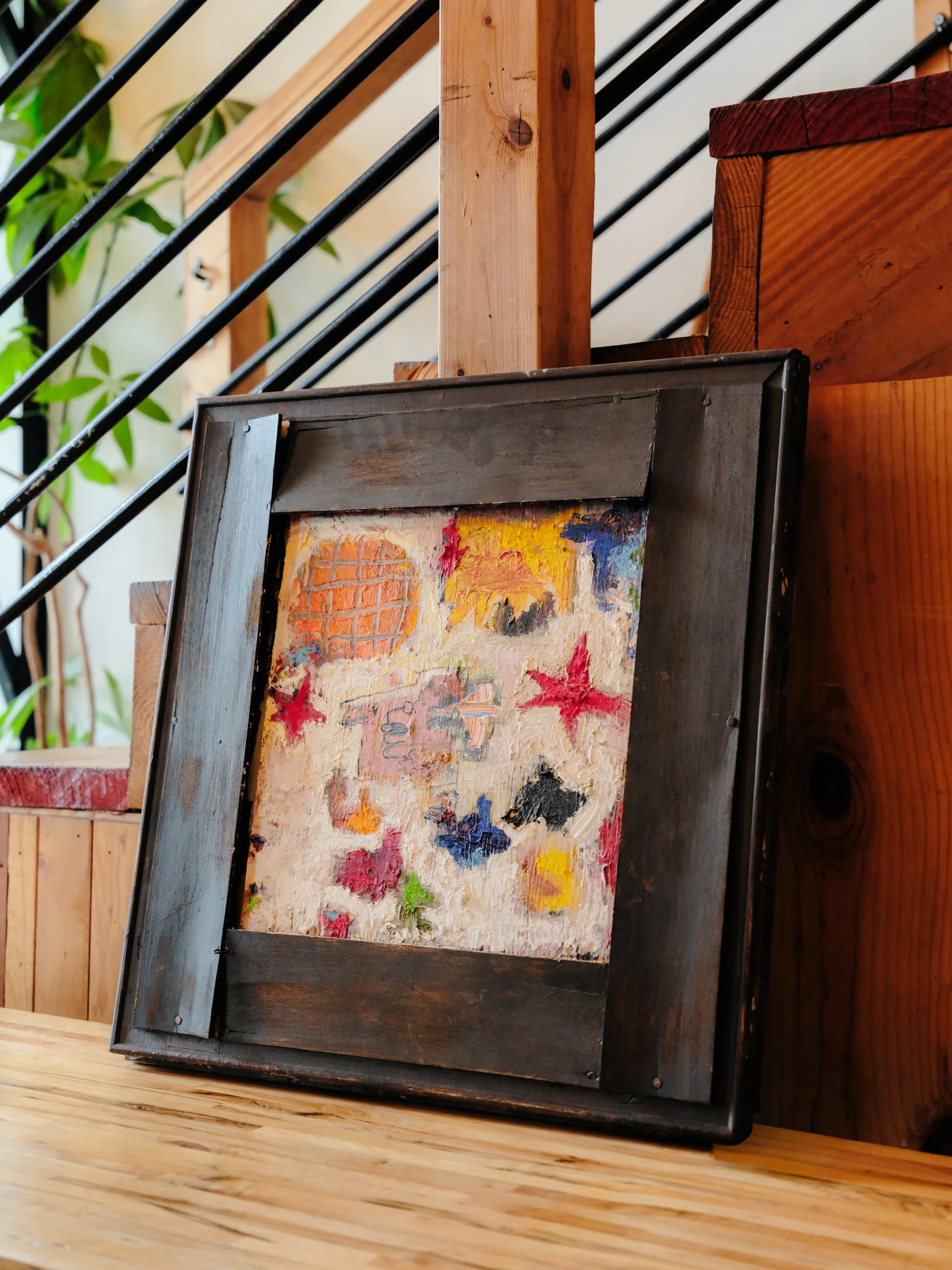
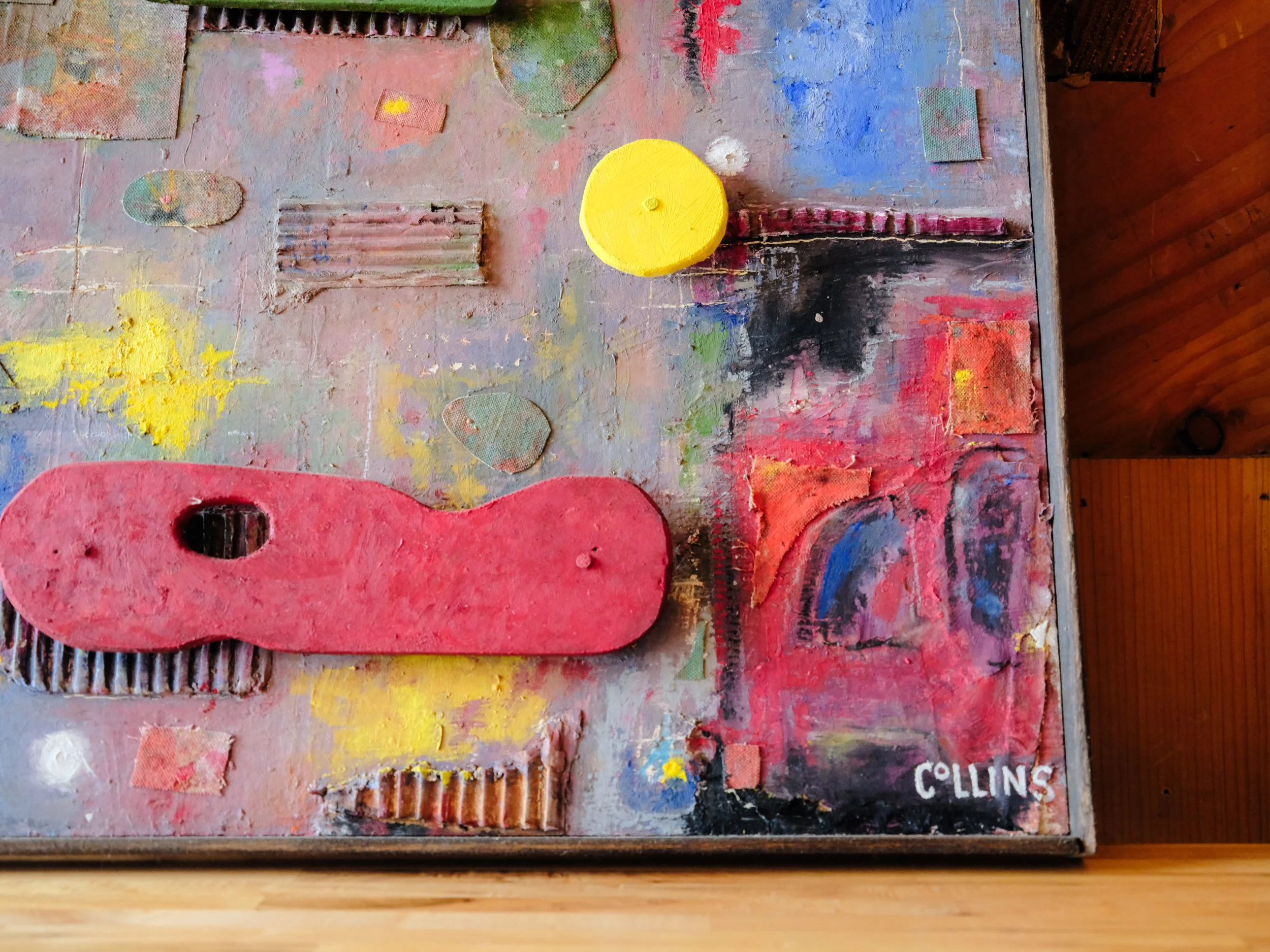
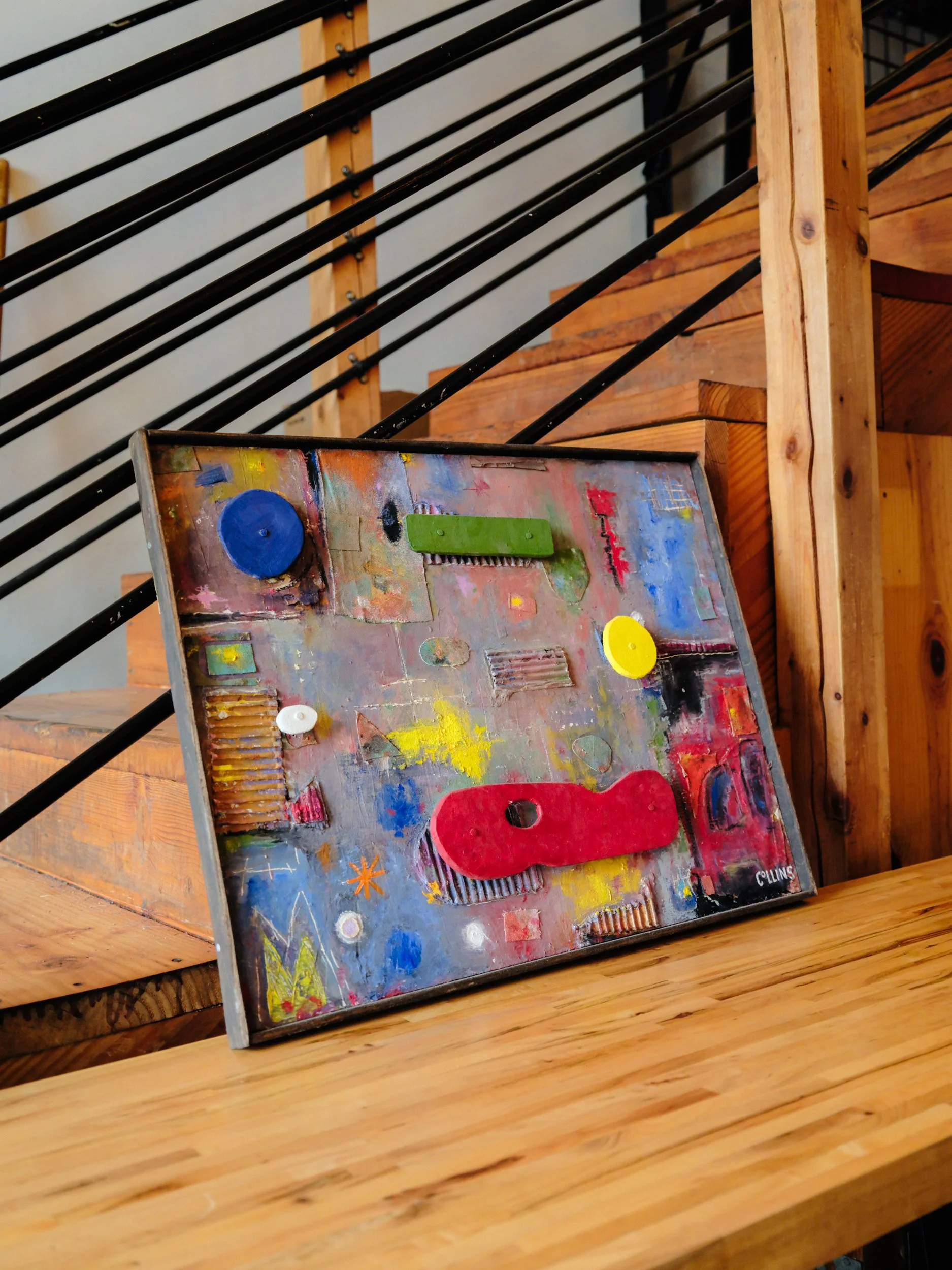
The assemblage works, signed "Collins," push into three dimensions. Corrugated cardboard strips, painted wooden discs, and small found objects are embedded in dense, layered surfaces and housed in dark wood frames. They carry the density of a collected life. Part circuit board, part landscape, part face emerging from accumulated material. If the paintings are about emotions moving through open space, these pieces are about emotions accumulating in confined ones.
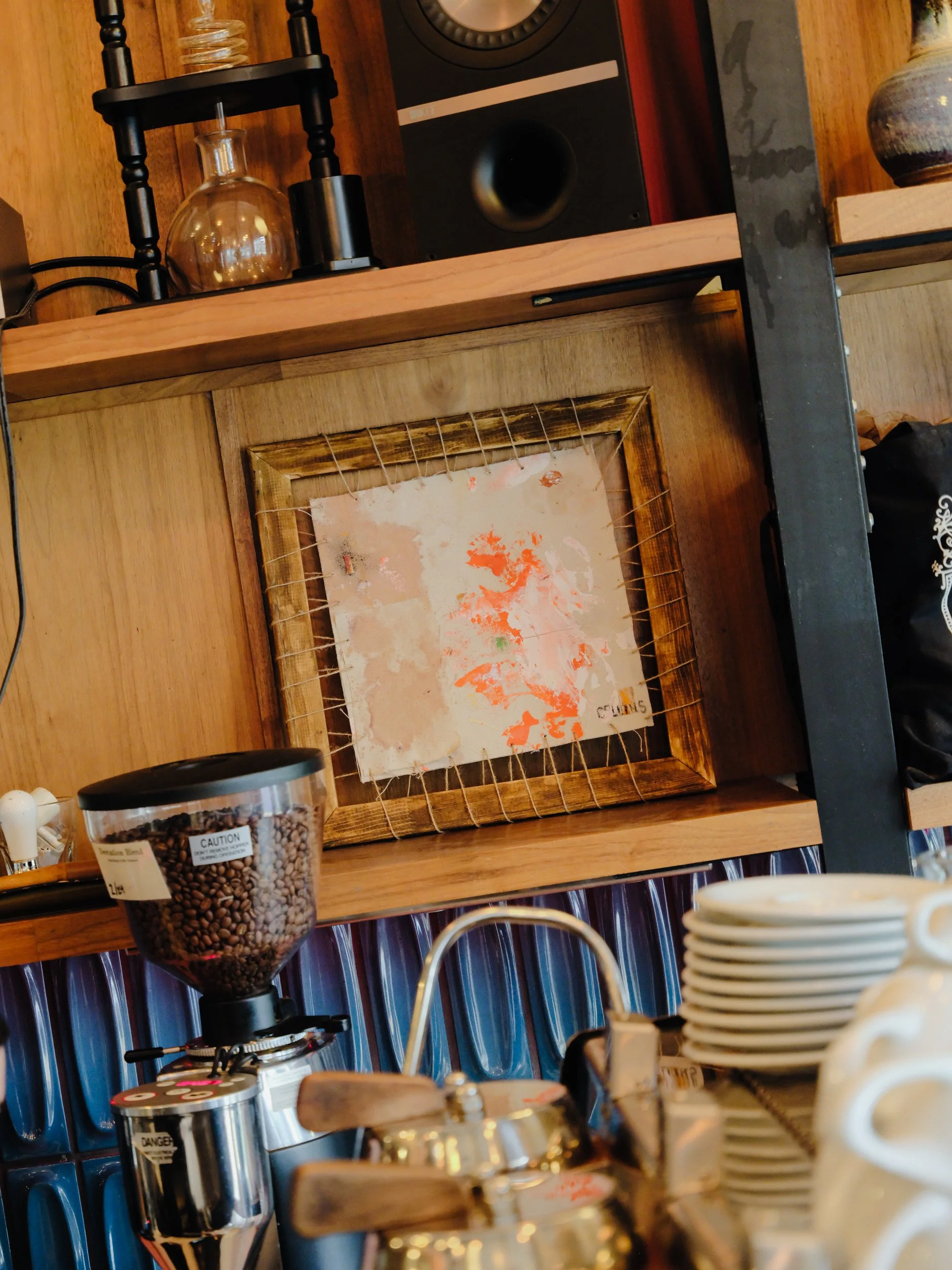
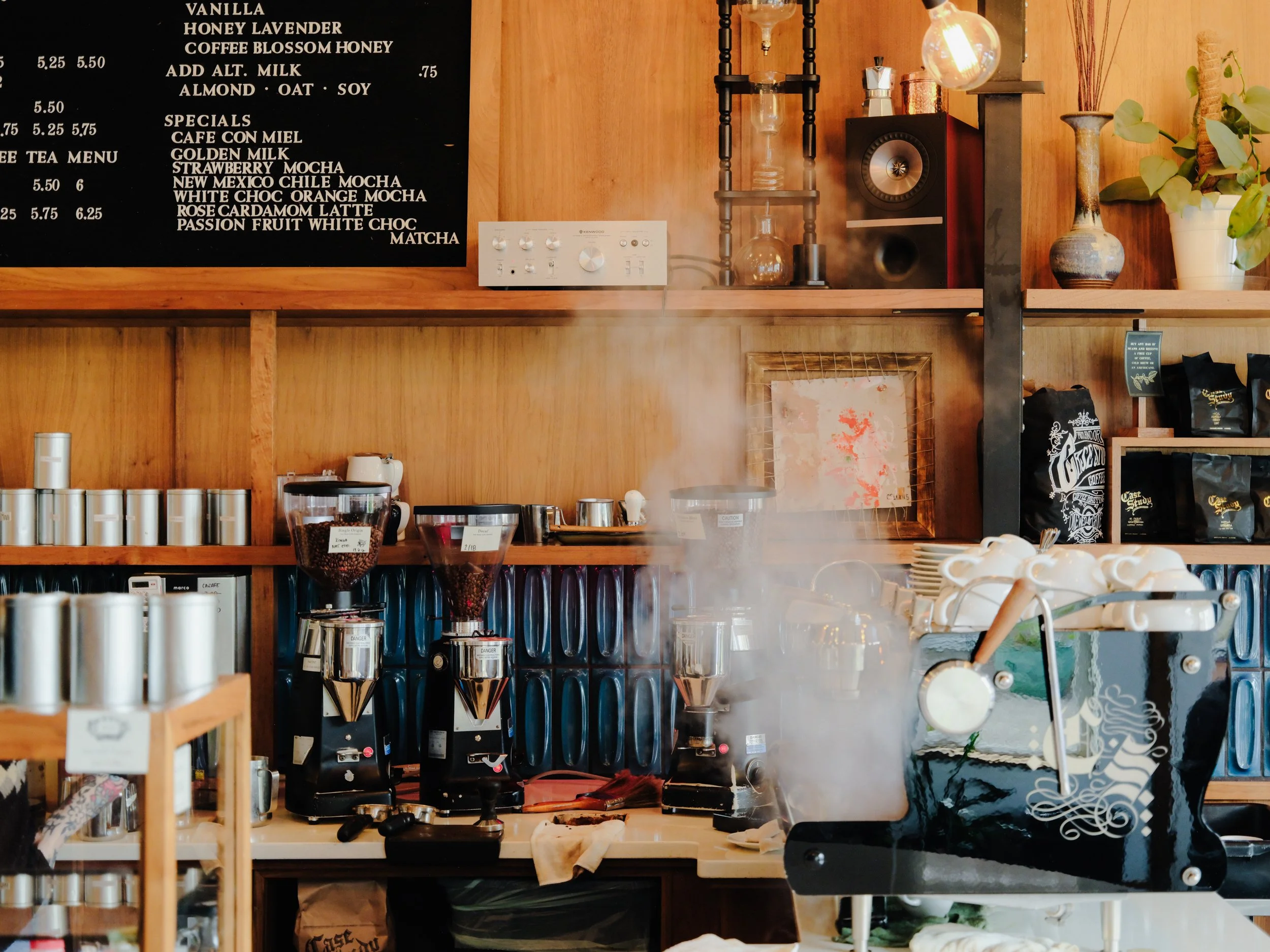
The string-laced works are the quietest presence. Canvas is stretched across rough wooden frames with visible twine gridded across the surface, coral and cream pigment barely surfacing beneath. They read as something held together under tension, the most exposed and vulnerable objects in the show.
Installed salon-style above communal tables and tucked behind the espresso bar, the work lives inside the ambient noise of a working coffee shop. Laptops, conversation, the hiss of steam. It's a fitting context for pieces that are themselves about interrupted transmission, scattered signals, and the hope that something lands.